Latest Blog Posts
Te Noho Tahi: A Holistic Wellbeing Model for Connection and Care in Schools
In 2024, I was granted a national study sabbatical—a rare and precious opportunity for deep reflection and exploration after more than two decades in school leadership. It was during this time that the framework for Te Noho Tahi was born, but its roots go back much further.
For years, I’ve worked to create space within my school where people feel seen, heard, and valued. So when I encountered The Spaces for Listening model developed by Charlie Jones and Brigid Russell, it struck a chord. Their work names and validates what I had long been practising—making time for intentional connection, offering non-judgemental listening, and creating environments of psychological safety.
But it also surfaced a challenge I knew all too well. As a principal, I’m often the one holding space for others. And while that works when I have the emotional bandwidth, it falls apart the moment I become the one who needs support. When I’m overwhelmed or depleted, I can’t facilitate the very space I most need to step into. Jones and Russell’s solution—having two facilitators in every session—makes perfect sense. But for small schools like mine, it’s not a scalable solution.
In New Zealand, supervision in education is not widely used. I’ve been advocating for its adoption for nearly 20 years, because I’ve seen first-hand how transformational it can be. But it’s difficult to explain the value of something so deeply experiential to school boards and systems focused on measurable outcomes. The costs, too, can be prohibitive—especially for small rural schools where every dollar counts.
Te Noho Tahi was developed as our answer to this reality. It’s a holistic wellbeing framework embedded in the everyday culture of our school. It reflects the same values as Spaces for Listening—presence, empathy, trust—but it is designed to be sustained from within. It doesn’t require extra funding or specialised staff. It relies instead on rhythm, intention, and a shared commitment to humanising our school spaces.
For staff, Te Noho Tahi includes daily gatherings, built-in supervision options, and the integration of AI to reduce workload and protect time for presence. For our tamariki, it offers tiered, relational practices to help them connect, reflect, and regulate without pressure. These include whole-class connection sessions at the end of each day, small group check-ins for those needing extra support, and one-on-one moments of presence with a trusted adult. The tamariki model is playful, visual, and developmentally responsive—guided by a living metaphor of a classroom tree where children contribute their thoughts, feelings, and acts of kindness as leaves. It grows with them.
It’s not an ‘add-on’; it is the cultural heartbeat of our day.
This model also allowed us to realise a long-held dream in 2024: making school entirely free for every student. By removing all financial barriers—including stationery, lunches, fruit, transport, uniforms, and camp fees—we reaffirmed our commitment to equity and belonging. No whānau should ever feel that school, or any part of the school experience, is unaffordable. Access to education should never come with a price tag that excludes.
Te Noho Tahi is our way of living these values daily. It’s not about adding more—it’s about making space for what matters. And when that space is held with care, courage, and consistency, it becomes transformational.
— Shannon McDougall, Principal, Tokoiti School
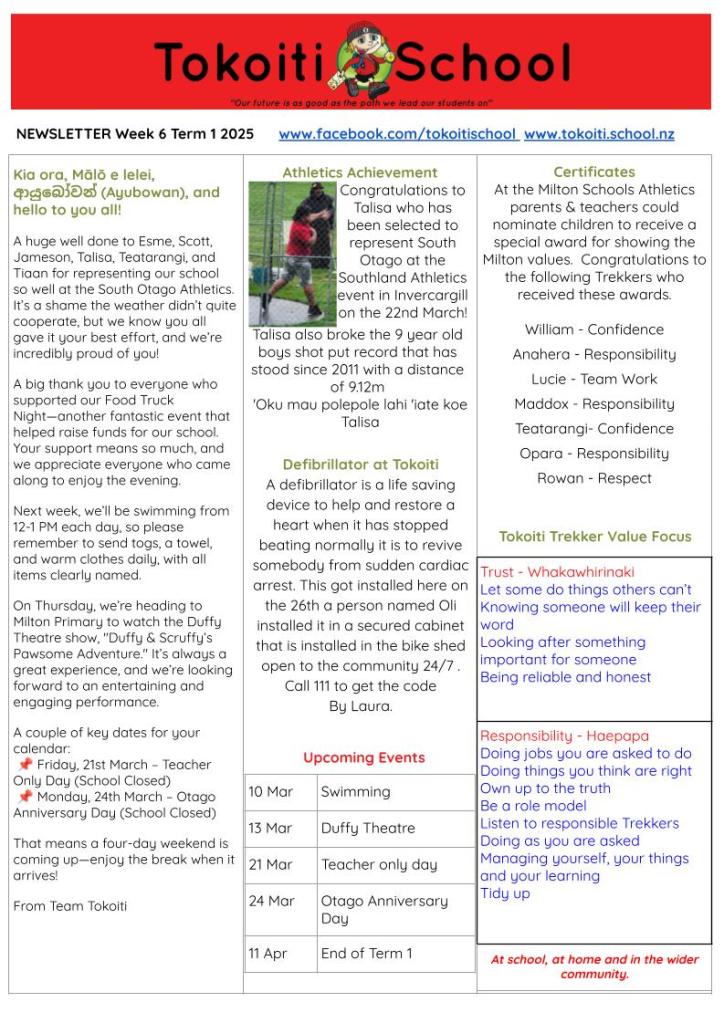
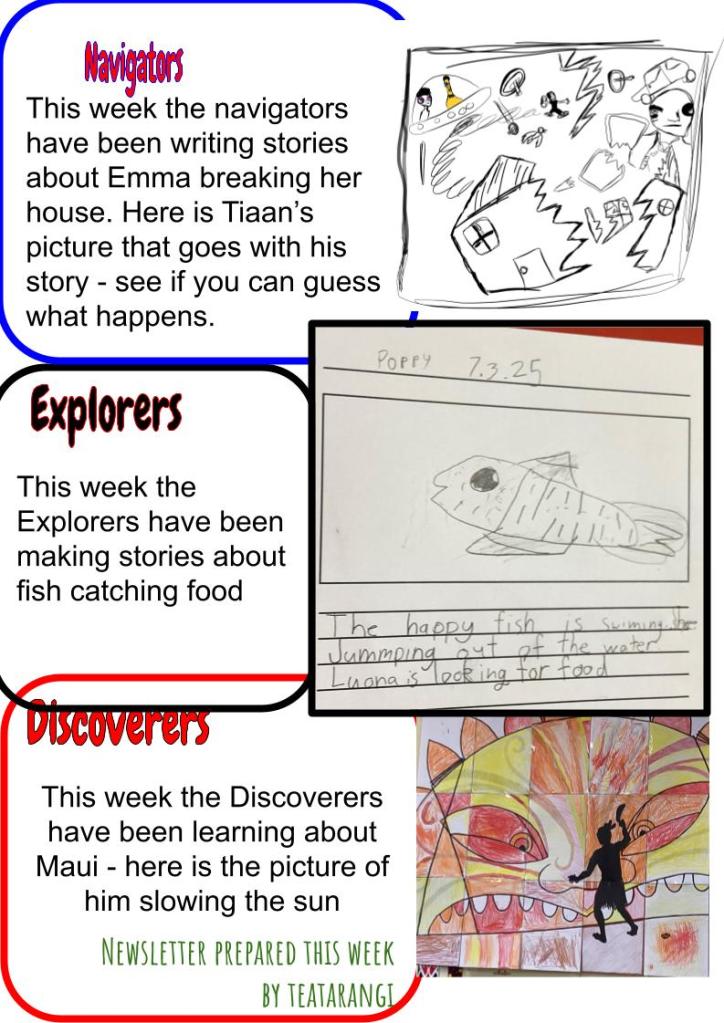
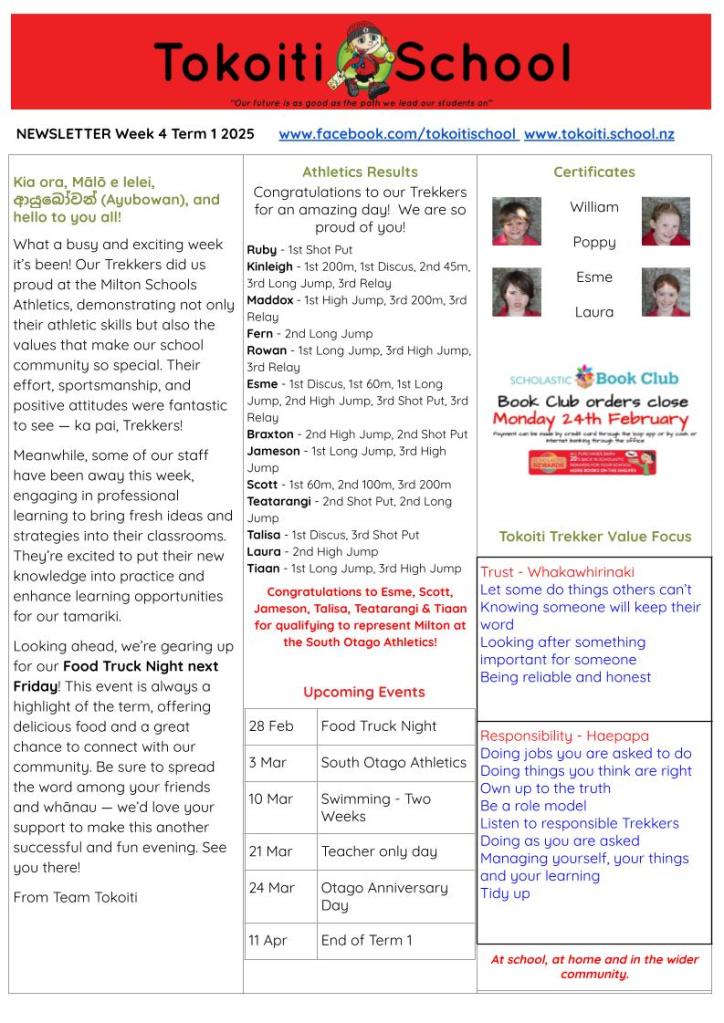
Newsletter Week 5 Term 1

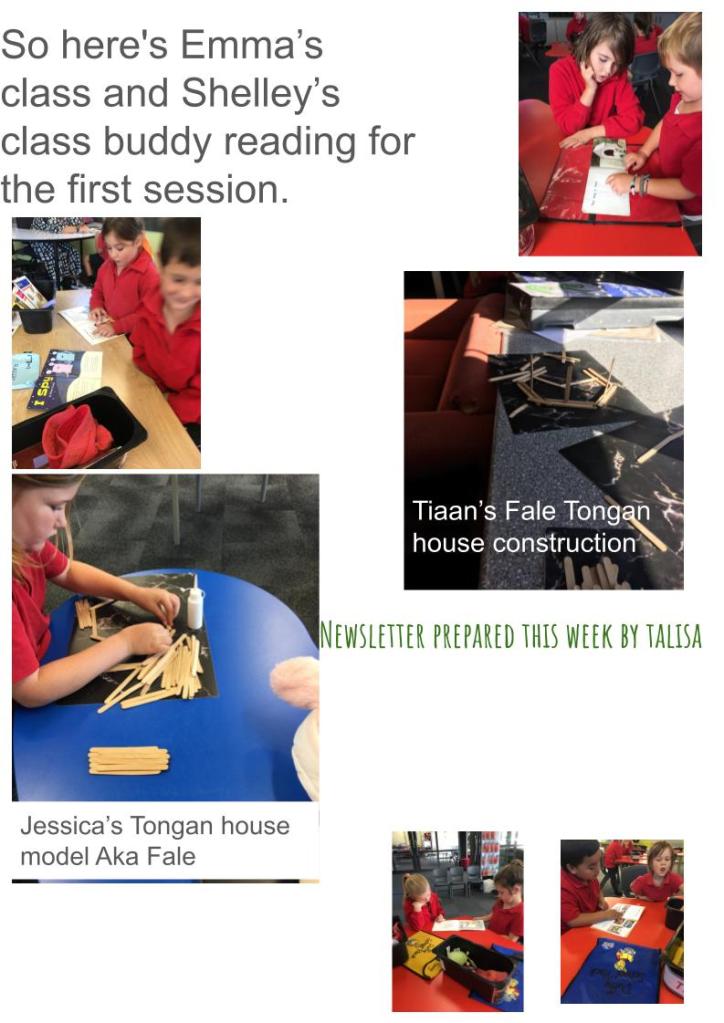
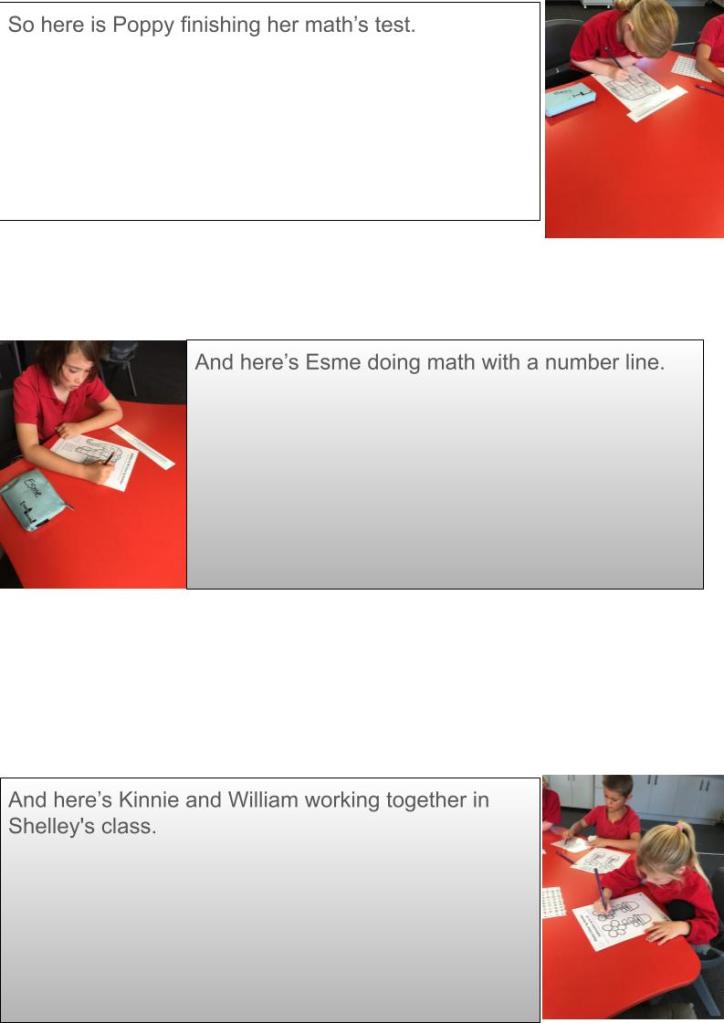
Here is our newsletter for Week 5. Don’t forget we have our food truck night tonight, we look forward to seeing you there!